
Amul - Story of an Indian brand

Noopurr R Chablani
Founder & Image Strategist
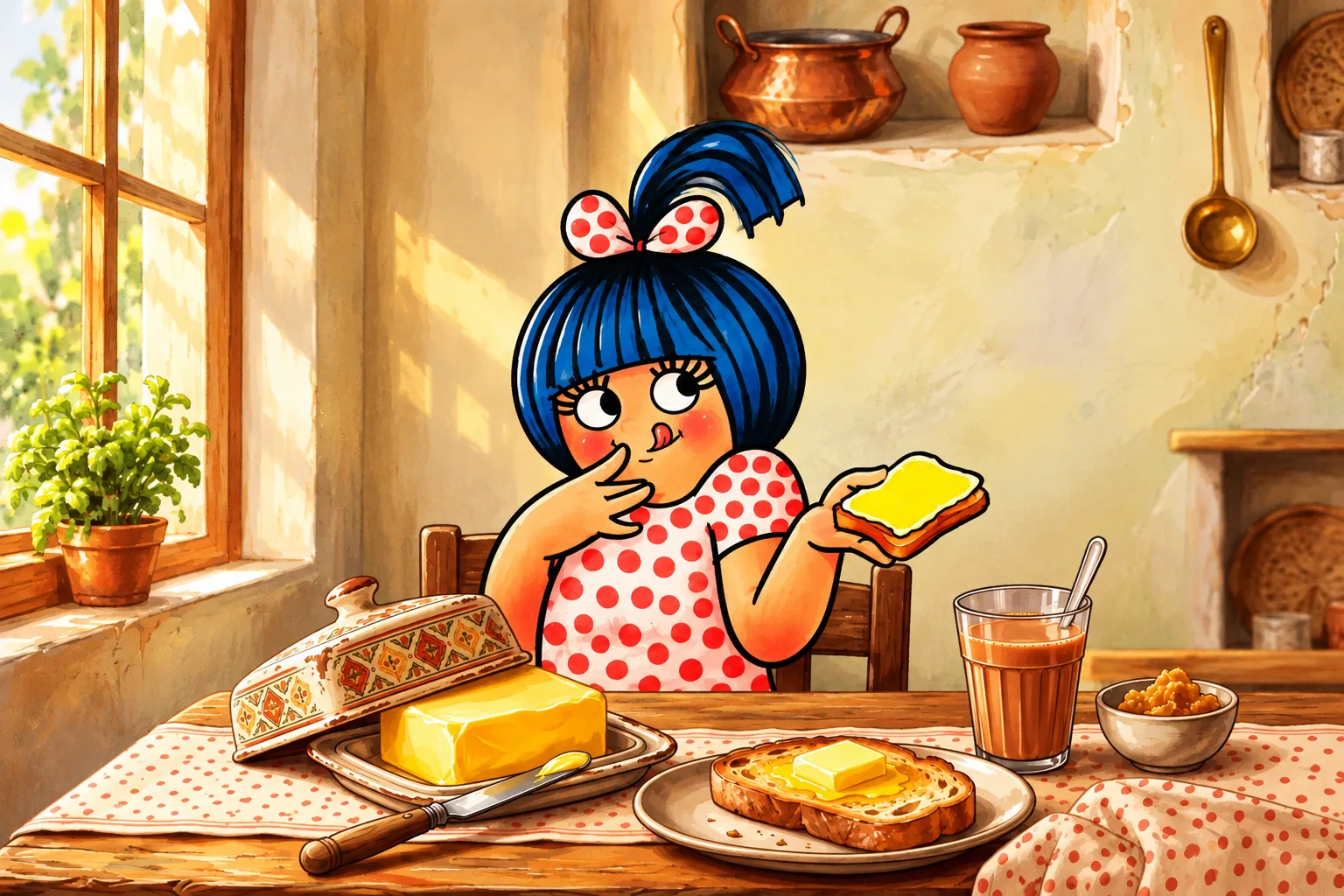
Some brands are recognised by their logos and some by their products. Amul became part of a country's cultural vocabulary. Here is what Amul teaches us about building brand relevance, consistency, and enduring recall.
Some brands are recognised by their logos and some by their products and then, there are brands that become part of a country’s cultural vocabulary. Amul belongs to the third category.
For generations of Indians, Amul has been more than a dairy brand. It has been the name on the butter packet at the breakfast table, the familiar girl in red and white, the witty topical advertisement that appears when the country is talking about something, and a brand that has managed to remain recognisable without remaining stuck in the past.
That is what makes Amul an interesting story in Indian branding. Not simply because it has been around for decades, but because it understood something many brands continue to struggle with: building recognition is not the same as building relevance, and relevance is what keeps a brand alive.
The brand was built on something bigger than the product
Amul's story began with a purpose that extended beyond selling dairy products. It emerged from a cooperative movement created to give farmers greater control over the value of their produce and create a more equitable system for milk procurement and distribution.
That foundation matters to the brand story. Because when a brand has a meaningful idea at its core, communication has something real to amplify.
Over time, Amul grew into a household name, but its communication did not depend solely on telling people that its products were good. Instead, the brand developed a personality and a point of view. It participated in every trend and every conversation happening around it.
That distinction is important. A product can be replicated, a price can be matched and packaging can be redesigned but a distinctive brand identity, built consistently over time, is the hardest to replace.
Then came the girl who had something to say
The Amul girl is arguably one of the most recognisable advertising characters in India. Her strength was never simply visual recognition, she became a communication device.
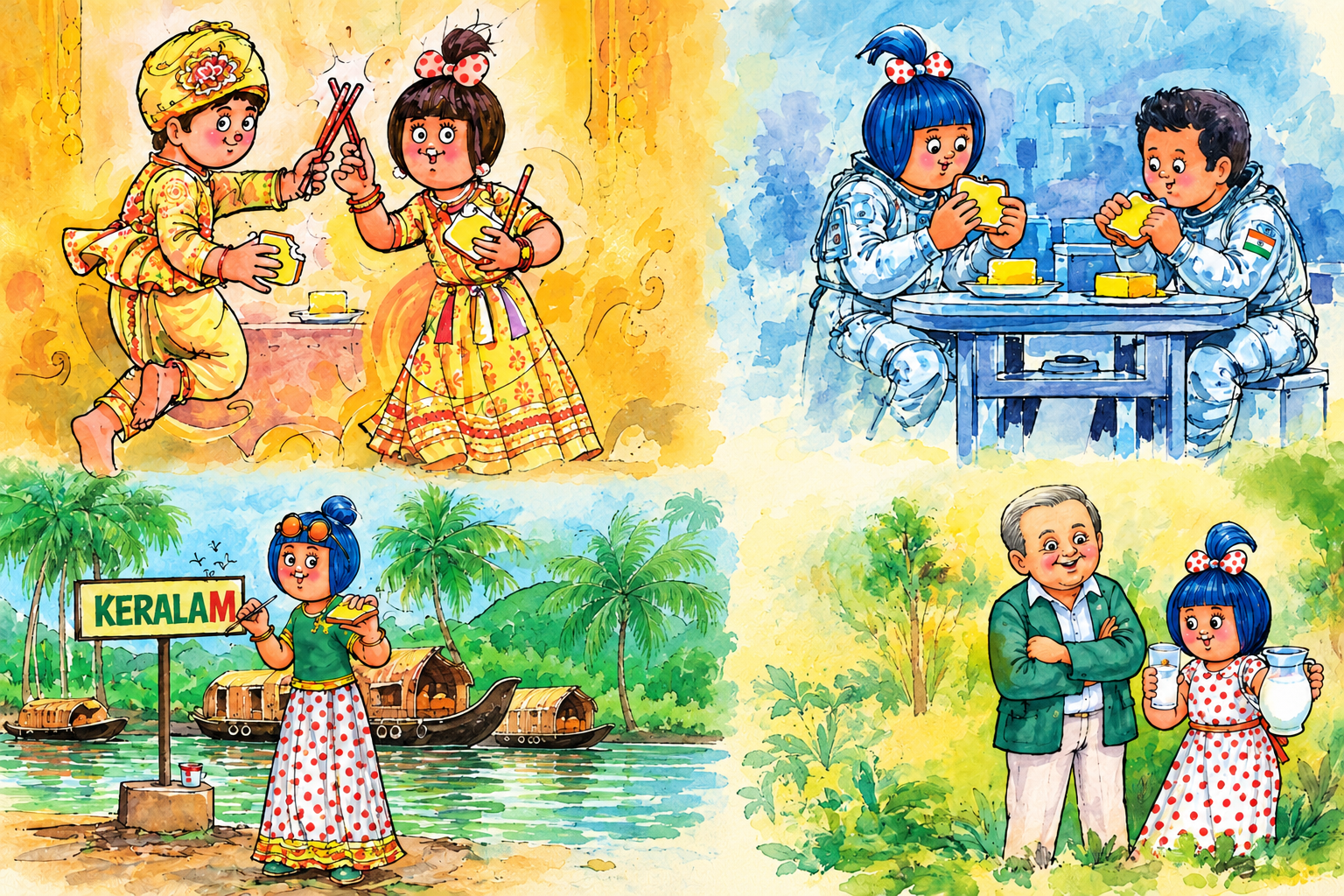
Through topical advertising, the brand found a way to respond to moments that people were already discussing - politics, sport, entertainment, social trends, public events and everyday cultural conversations.
The advertisements were often short but the wit was immediate. The visual language was familiar but to top it all - the brand did not communicate in isolation. It participated in the conversation.
This is where Amul's approach offers a valuable lesson for modern brands. Communication becomes more powerful when it understands what people are already paying attention to.
A brand does not always need to create a conversation from scratch. Sometimes, it needs to know when to enter an existing one and have something worth saying when it does.
Consistency created recognition. Context created relevance.
There is an interesting balance in Amul's communication - the context keeps changing, but the brand remains recognisable. The topics change, the headlines change and the cultural references also change, yet the visual identity, tone and personality remain remarkably consistent.
This is one of the most difficult things for a brand to achieve. Too much consistency can make communication predictable. Too much change can make a brand difficult to recognise. Amul found a middle ground.
Think of Amul’s topical advertising. One day, the brand may be commenting on cricket; the next, a major film release or a cultural moment. The subject changes with the conversation, but the familiar mascot, visual language and witty tone remain. The message changes but the brand does not.
For today's businesses, particularly those communicating across multiple platforms, this becomes even more important. A brand may have LinkedIn posts, Instagram content, press coverage, founder interviews, newsletters, campaigns and website copy. Each may have a different format, but the perception created by all of them should still feel like it belongs to the same brand.
Amul understood that recall is built over time
There is often an expectation that every piece of communication should generate immediate attention. In reality, enduring brands are rarely built through isolated moments of visibility but they are built through repetition - the same colours, the same character, the same sense of humour and the same ability to respond to the world around it.
Over time, these elements become mental shortcuts. People do not have to be told that an advertisement is Amul, they recognise it. That is the difference between being visible and being memorable.
The brand also understood the value of cultural intelligence
One of Amul's greatest communication strengths has been its ability to understand the Indian audience beyond demographics. A topical advertisement works because it assumes something more than consumption, it assumes cultural awareness.
The brand observes what people are discussing, what they are watching, celebrating, debating or laughing about. It then translates that context into a few words and an instantly recognisable visual - that is not simply advertising creativity, it is cultural intelligence.
Cultural intelligence has become increasingly valuable for brands today. Consumers are exposed to an enormous volume of content every day. Competing for attention is no longer only about how loudly a brand can speak, it is about whether the brand understands what deserves to be said, when it should be said and how it should be said.
There is a PR lesson here too
Amul's story is particularly relevant to public relations because PR, at its strongest, is not simply about getting a brand mentioned - It is about building familiarity, credibility and a sustained relationship with the audience.
A press release can create a moment of visibility, an interview can create authority, an authored article can establish a point of view, a strong founder narrative can build recognition - but when these individual efforts consistently reinforce the same perception, they begin to create something much larger: reputation.
This is where communication moves beyond publicity and that is perhaps one of the most important lessons from Amul. The brand did not build recognition by saying the same thing repeatedly. It built recognition by showing up consistently while finding new ways to remain relevant.
The real story is not about butter
It would be easy to look at Amul and conclude that its success lies in a memorable mascot, clever advertising or decades of market presence. Those are certainly parts of the story.
The deeper lesson here is about the relationship between identity, consistency and relevance. A strong brand knows what it stands for, a strong communicator knows what the audience cares about and a strong strategy knows how to bring the two together.
Amul's communication demonstrates what happens when these three things work in alignment. The brand has evolved with the country while retaining the visual language, wit and cultural familiarity that have made it instantly recognisable across generations. That is not just good advertising, it is good brand building.
What Indian brands can learn from Amul
The biggest lesson may be surprisingly simple: don't communicate merely to be seen, communicate to be remembered and know what your brand should mean before deciding what it should say.
In addition to that, build recognisable assets and protect them and understand the culture your audience lives in. Respond to relevance without abandoning consistency.
And most importantly, remember that a brand is not built through one campaign, one headline or one viral moment, it is built through the accumulation of perceptions over time. Eventually, the strongest brands do not need to introduce themselves, people already know who they are.
And that is perhaps the real story of Indian branding that Amul has been telling us all along.
Image Credits: All campaign visuals and artwork featured in this article are credited to Amul India.