Are You Digitally Social?
AI PRGMR
Brand Experience and Digital Lead
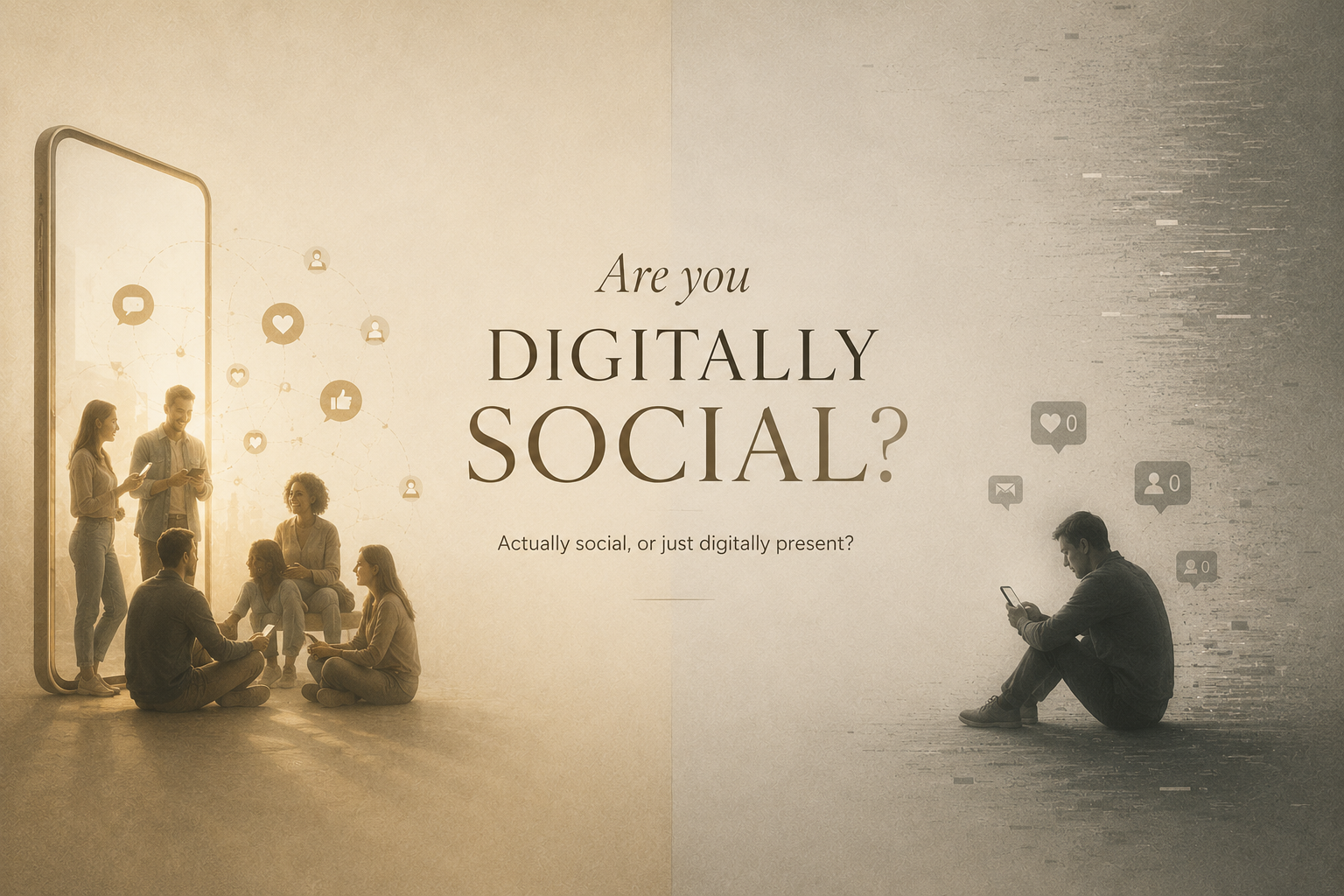
Having a website isn't enough anymore. Here's a simple, no-jargon guide to going from 'digitally present' to actually digitally social.
Every business owner has heard it a hundred times: "You need a website." So they get one. They feel relieved. Box checked.
But here's the question nobody asks next: are you actually digitally social, or just digitally present?
There's a big difference. A website that just sits there, looking pretty, is like opening a shop and never putting up a signboard, never telling anyone what you sell, and never restocking the shelves. Being digitally social means your website and your social presence are actively talking to the right people, and to the search engines that connect those people to you.
Being Digitally Social Means Being Useful
A socially active person doesn't walk into every conversation talking about themselves.
They listen. They contribute. They respond.
The same principle applies online.
A digitally social brand:
- Answers questions
- Shares insights
- Educates customers
- Participates in conversations
- Creates content people genuinely find useful
A digitally present brand simply exists.
A digitally social brand engages.
It gives people a reason to return, interact, and remember.
And in a digital world where attention is abundant but trust is scarce, that difference matters more than ever.
Let's break this down in plain language.
1. A Website Is Not the Finish Line: It's the Storefront
Getting a website built feels like the big achievement. In reality, it's just the storefront. What matters far more is what's written inside it.
Here's the part most people miss: your website's content needs to clearly describe exactly what you do, using the same words your customers and your industry actually use. If you run a bakery and your homepage just says "Welcome to our world of taste" with no mention of "custom birthday cakes," "eggless cakes," or "cake delivery in Indore", Google has no idea what to recommend you for.
Think of search engines as librarians. If your book has no proper title, no chapter headings, and no index, the librarian simply can't recommend it to anyone looking for it, no matter how good the story inside is.
The fix: your content should mirror the real terms people search for in your industry, not just clever taglines.
2. Organic vs. Inorganic: What Do These Words Even Mean?
You'll hear marketers throw around "organic" and "inorganic" like everyone already understands them. Here's the plain-English version:
- Organic = free visibility. This happens when search engines (Google, Bing) or AI tools read your website/content and decide it's relevant enough to show people, without you paying for that placement.
- Inorganic = paid visibility. This includes Google Ads, paid keywords, boosted social media posts, paying influencers to talk about you, and even newer paid placements like sponsored mentions inside AI chat tools like ChatGPT.
Neither one is "better" in isolation; they just work differently:
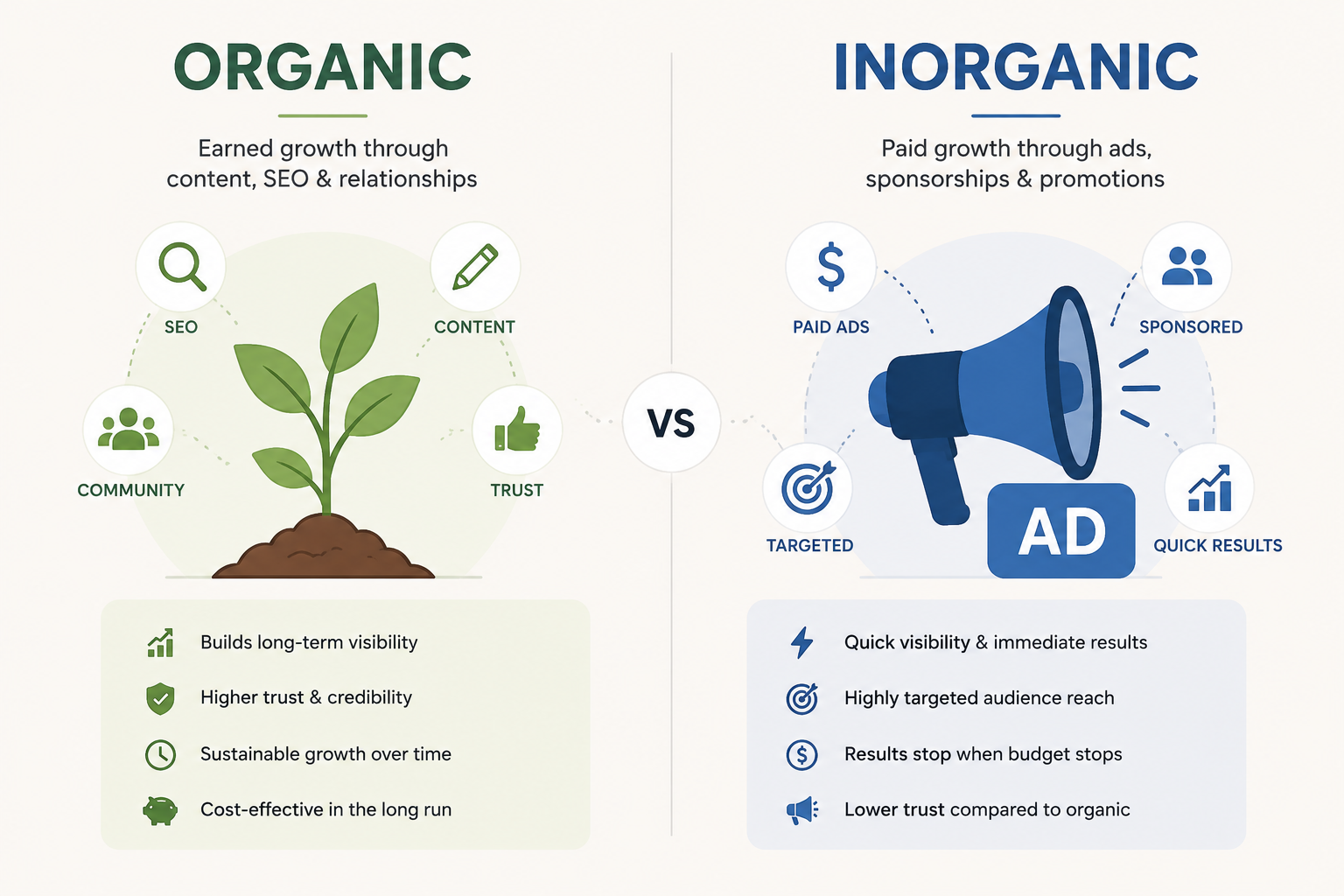
Organic vs. Inorganic Comparison
-
Organic (Free Visibility)
- Cost: Free (requires time & effort)
- Trust: Higher (feels earned and authentic)
- Longevity: Compounds over months and years
-
Inorganic (Paid Visibility)
- Cost: Paid (instant but stops when budget runs out)
- Trust: Lower (audiences recognize the sponsored tag)
- Longevity: Active only while you are paying
3. Why Organic (SEO) Actually Matters
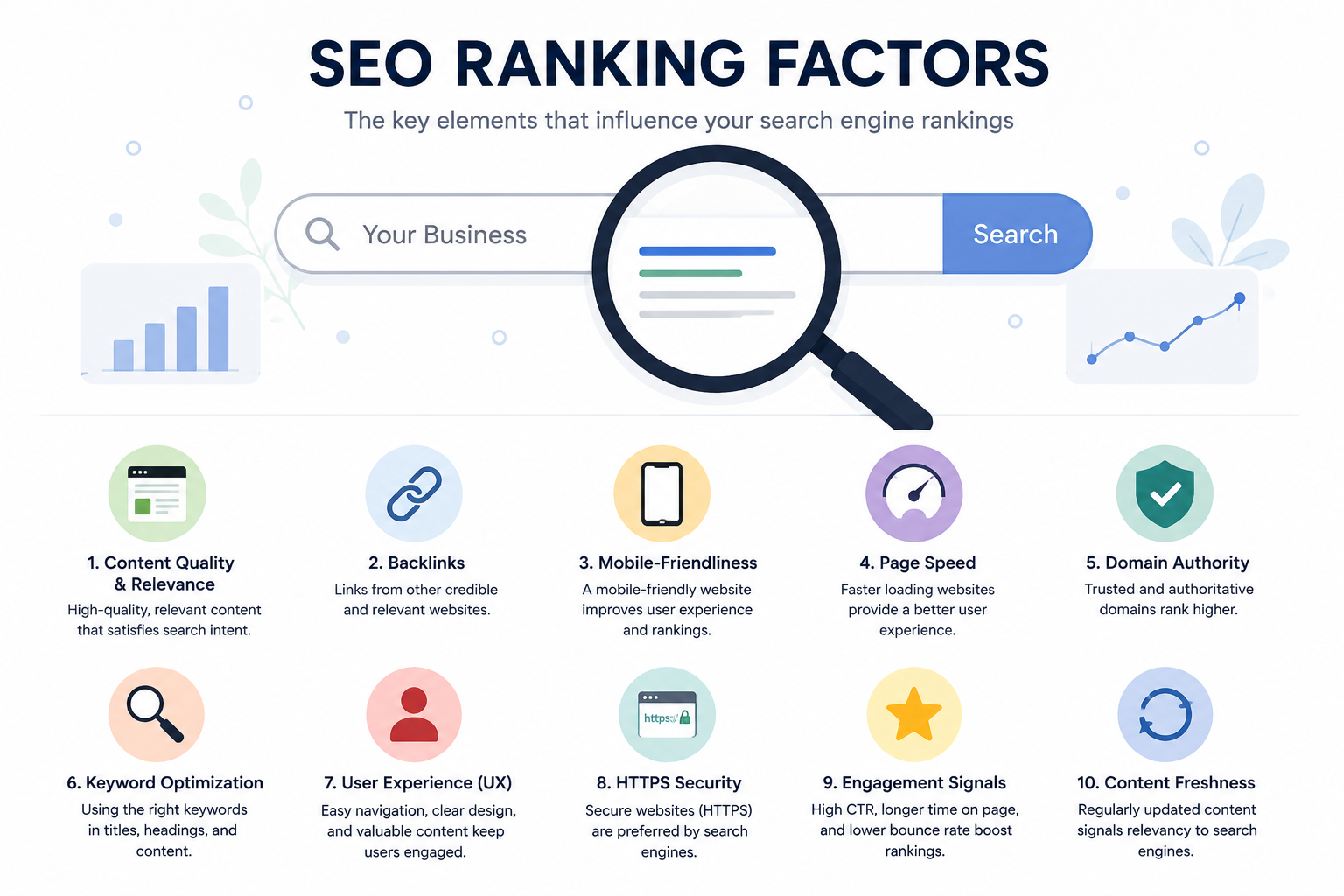
SEO (Search Engine Optimization) is just the practice of making your website easy for search engines to understand and trust, so they rank it higher when someone searches for what you offer.
Why does ranking matter so much? Because:
- Most people never scroll past the first page of Google results.
- Top organic results are seen as more trustworthy than ads (people subconsciously skip the "Sponsored" tag).
- Good SEO keeps working for you 24/7, even while you sleep, unlike an ad that stops the second your budget runs out.
Search engines look at things like: how relevant your content is, how often it's updated, how fast your site loads, whether it works well on mobile, and whether other credible sites/pages link back to you. None of these require a big budget; they require consistency and clarity.
4. Why Consistency Beats Bursts of Effort
Posting once and disappearing for three months does almost nothing. Search engines and social media algorithms both reward activity and freshness, treating a site or page that's regularly updated as "alive" and worth showing more often.
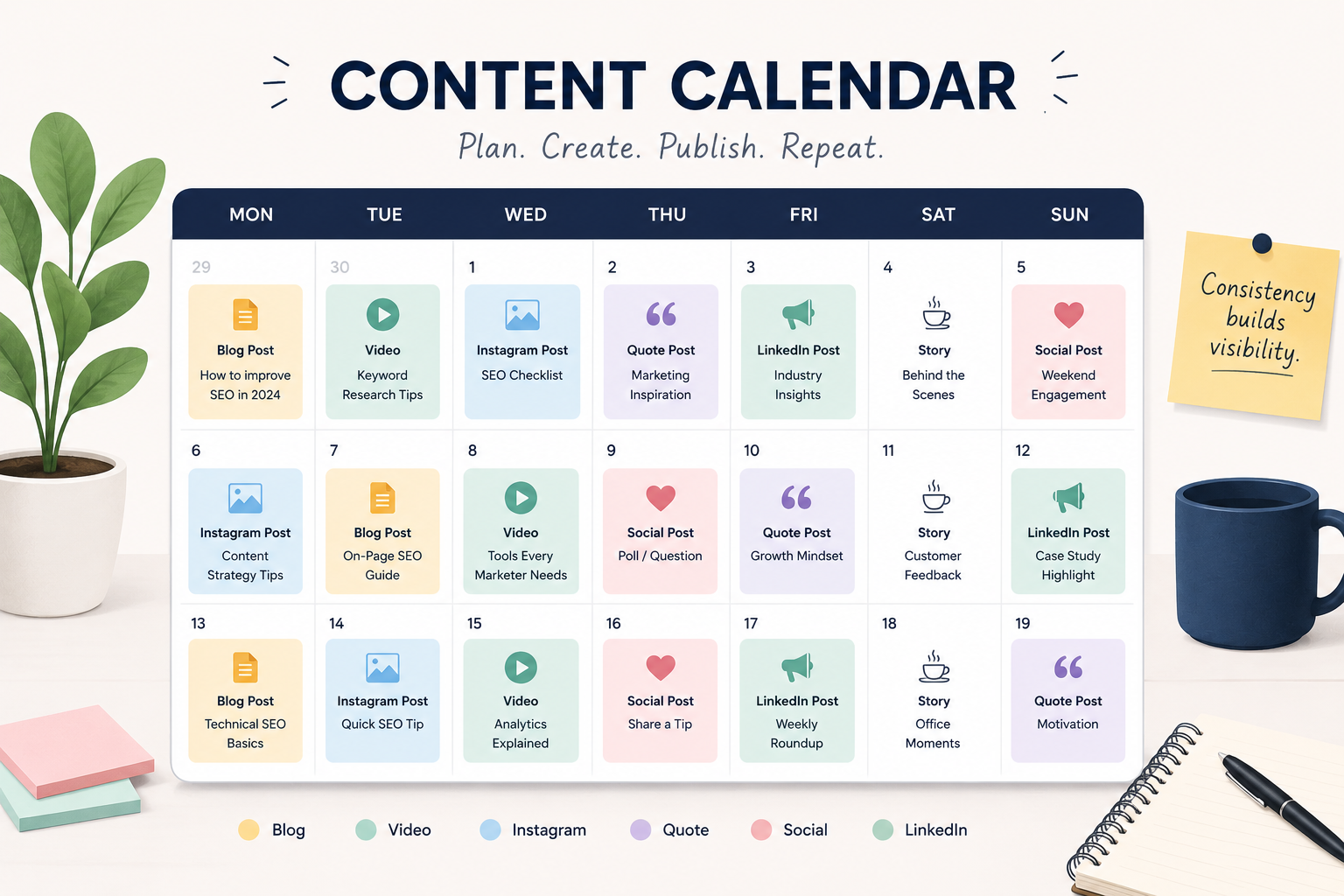 This is exactly why:
- A blog updated weekly slowly builds up dozens of keyword-rich pages, with each one serving as a small doorway for someone to find you.
- A social media account that posts consistently builds an audience that trusts and engages with you before they even need your product.
This consistent effort is what builds organic momentum, so that you're not constantly reaching into your pocket for ads just to stay visible.
5. Five Free Things You Can Do Today
You don't need a big budget to start. Here are five completely free actions:
- Claim & complete your Google Business Profile, which alone helps you show up on Google Maps and local searches.
- Set up Google Search Console, which tells you exactly how Google sees your website and flags errors that hurt your ranking.
- Connect Google Analytics (GA4), which is free and shows you which pages people actually visit and where they come from.
- Do basic free keyword research, using tools like Google's own Keyword Planner or the free tier of Ubersuggest to show you what your customers are actually typing into search.
- Pick one social platform and post consistently, as even repurposing your website content into 2-3 posts a week beats sporadic posting across five platforms.
6. How We Can Help: Organically and Inorganically
Every business is at a different stage. Some need their existing content and keywords fixed before anything else. Some are ready to pair that with smart, targeted paid campaigns to speed things up.
At Words Matter, we look at your current digital presence (including website, content, and social) and identify exactly where the gaps are between what you're saying and what your industry is actually searching for. From there, we help build both sides: the organic foundation that grows steadily over time, and targeted inorganic campaigns when you need quicker visibility for a launch, season, or push.
If you're not sure whether your website is actually working for you or just sitting there, that's usually the first thing worth checking.
Conclusion
Being digitally social isn't a one-time task you finish and forget. It's an ongoing relationship between your brand, the words on your website, and the platforms your customers actually use. A website is just the address. What you do with it, consistently, is what makes you findable, trustworthy, and ultimately, chosen.
So, are you digitally present, or are you digitally social?